Dublin Core
Title
El Ghersa El Kbira
Description
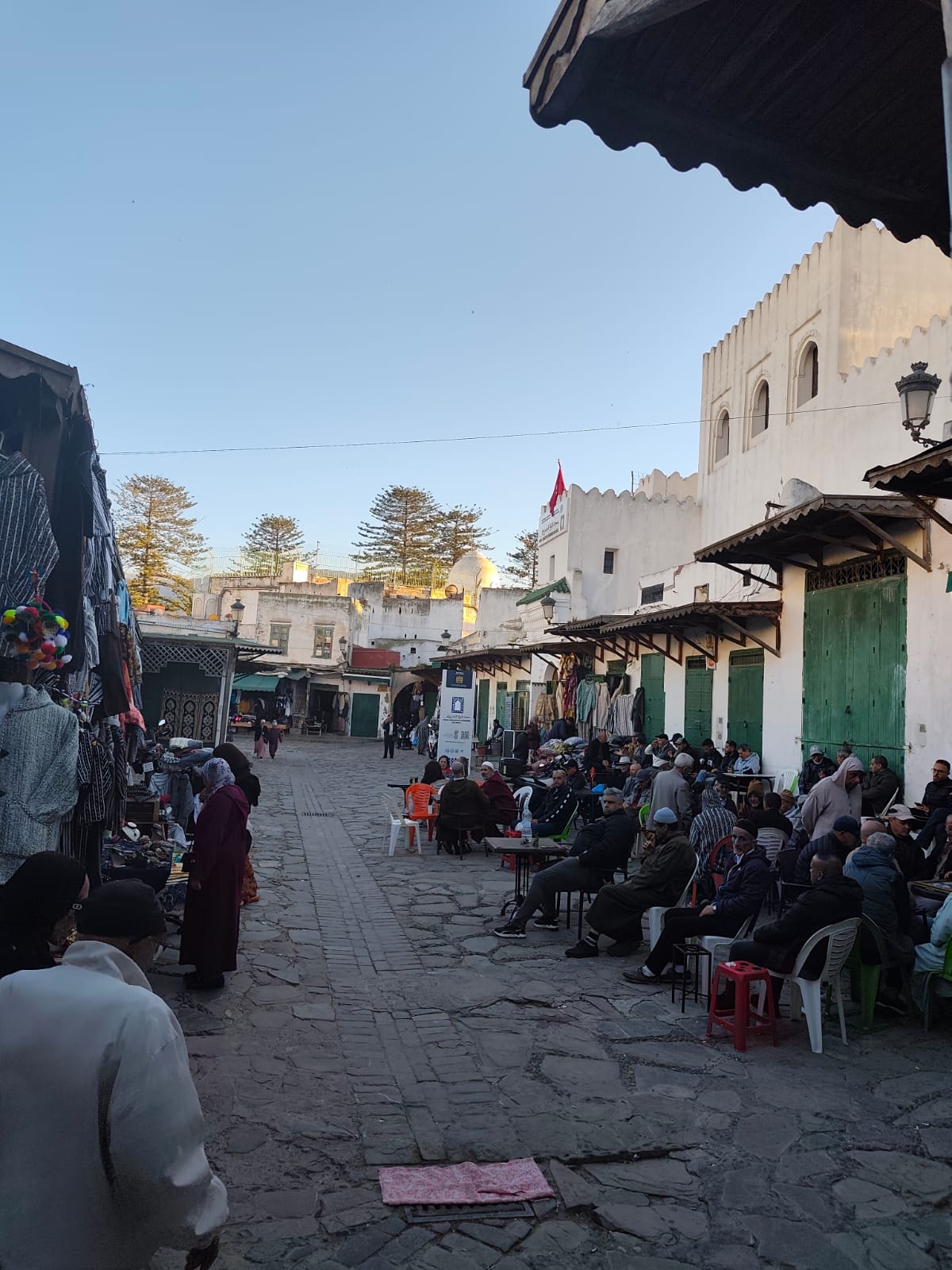
El Ghersa El Kbira is one of the oldest and most historically significant public squares in the medina of Tetouan in northern Morocco. Originally located outside the first defensive walls of the city during the early phase of Tetouan’s reconstruction around 1484, the area was initially known for its cultivated and irrigated lands, from which the name “El Ghersa” (“the planted area” or “orchard”) is believed to derive. During the sixteenth century, following the major urban expansion associated with successive waves of Andalusian migration after the fall of Granada in 1492, El Ghersa El Kbira became integrated into the urban fabric of the medina and developed into an important commercial and social space within the district known as al-Balad, the oldest neighborhood founded by Sidi Ali al-Mandri and the Andalusian settlers.
Historical traditions associate the square with the maritime and corsair period that characterized Tetouan between the sixteenth and eighteenth centuries. Some local narratives suggest that commercial activities linked to prisoners and captives once took place there during the era of Mediterranean naval conflict, although detailed archival confirmation remains limited. Over time, however, the square evolved into one of the city’s principal market and gathering spaces, surrounded by traditional shops, cafés, religious institutions, and small commercial “tarbi‘at” (paved market squares) characteristic of Tetouan’s urban organization.
Architecturally and culturally, El Ghersa El Kbira reflects the Hispano-Moorish identity of Tetouan through its whitewashed façades, traditional urban layout, stone paving, and proximity to important heritage landmarks such as the Luqash Mosque and the Musée Loukach du Patrimoine Religieux. Today, the square remains one of the liveliest communal spaces in Tetouan’s UNESCO-listed medina and an important symbol of the city’s social memory, commercial history, and Andalusian heritage.
Historical traditions associate the square with the maritime and corsair period that characterized Tetouan between the sixteenth and eighteenth centuries. Some local narratives suggest that commercial activities linked to prisoners and captives once took place there during the era of Mediterranean naval conflict, although detailed archival confirmation remains limited. Over time, however, the square evolved into one of the city’s principal market and gathering spaces, surrounded by traditional shops, cafés, religious institutions, and small commercial “tarbi‘at” (paved market squares) characteristic of Tetouan’s urban organization.
Architecturally and culturally, El Ghersa El Kbira reflects the Hispano-Moorish identity of Tetouan through its whitewashed façades, traditional urban layout, stone paving, and proximity to important heritage landmarks such as the Luqash Mosque and the Musée Loukach du Patrimoine Religieux. Today, the square remains one of the liveliest communal spaces in Tetouan’s UNESCO-listed medina and an important symbol of the city’s social memory, commercial history, and Andalusian heritage.