Dublin Core
Title
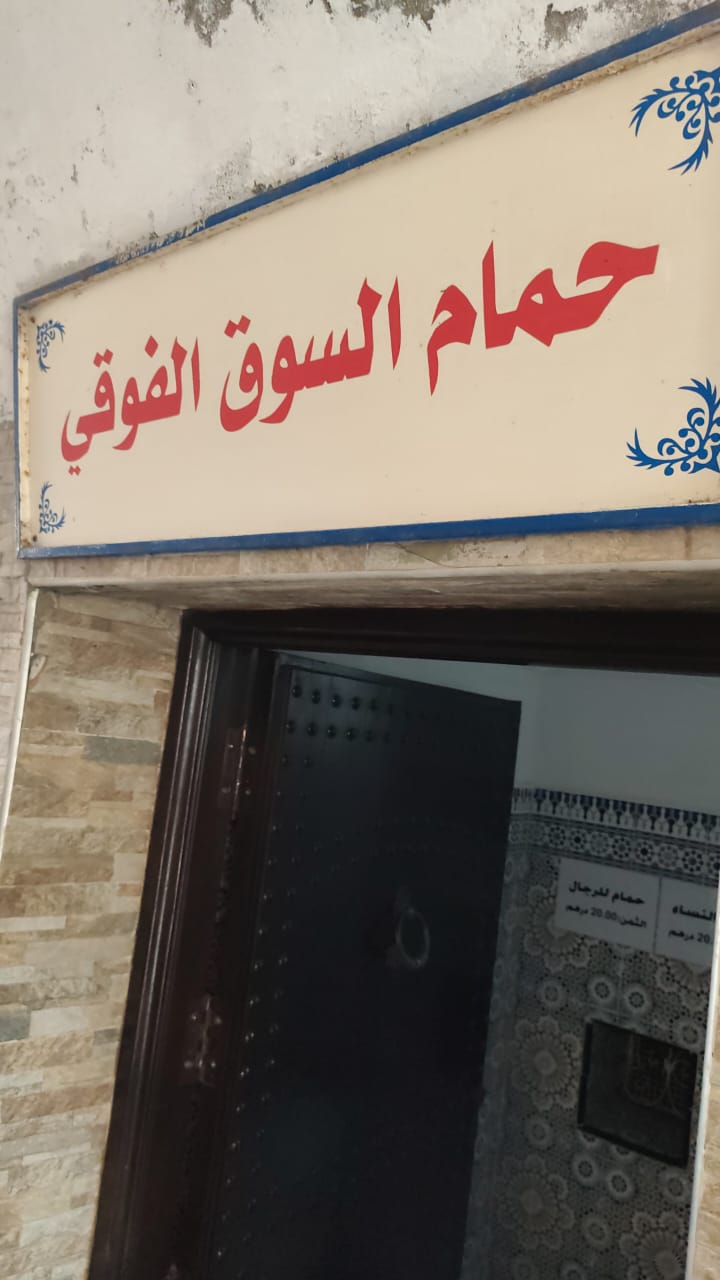
Hammam Souk El-Fuqi
Description
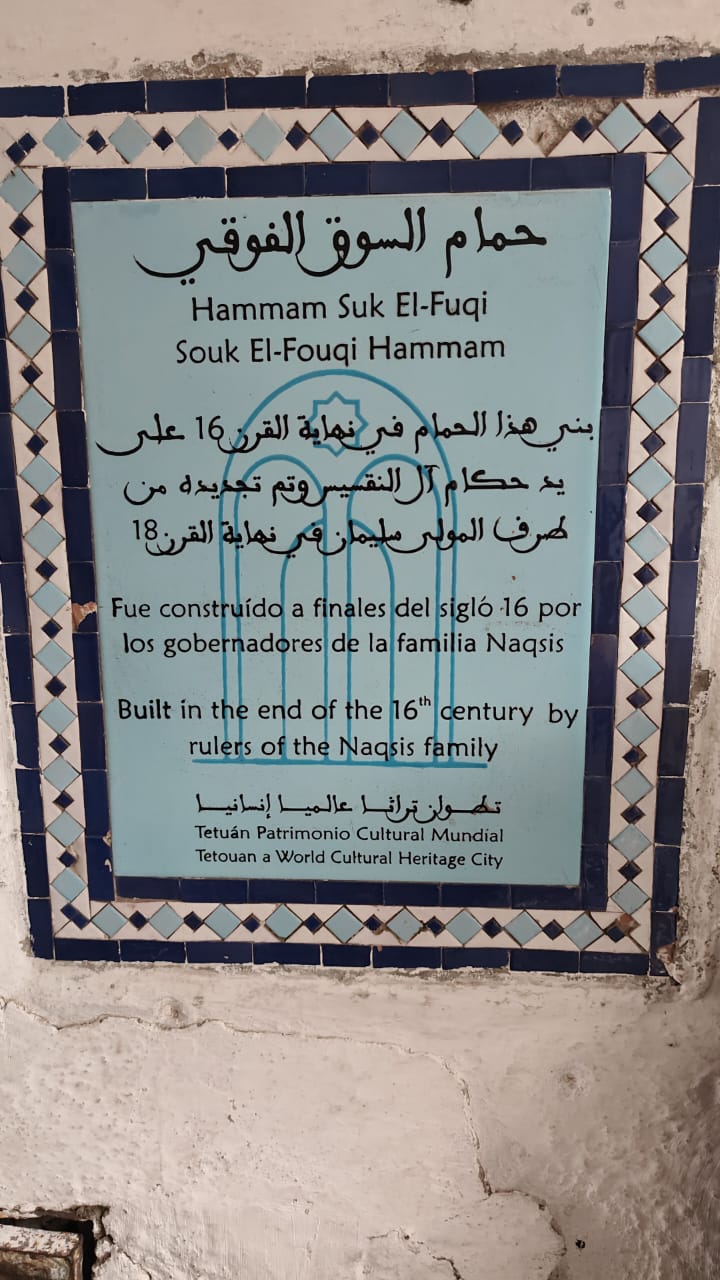
Hammam Souk El-Fuqi (also known as Hammam Souk El-Fouqi) is a historic public bath located in the Souk El-Fouqi quarter within the medina of Tetouan in northern Morocco. The bath was constructed at the end of the sixteenth century, approximately between 1580 and 1600, during the rule of the Naqsis family, a prominent local dynasty that governed Tetouan from the late sixteenth to the early nineteenth century. The Naqsis played a major role in shaping the city’s urban development, sponsoring numerous religious and public structures, including mosques, fountains, and hammams that served the daily needs of the population.
The hammam underwent an important restoration at the end of the eighteenth century, around 1792–1800, during the reign of Sultan Moulay Slimane (1792–1822). This renovation reflects the continued significance of the bathhouse as an essential institution in the social and hygienic life of the medina. Like other traditional Moroccan hammams, it was designed with a sequence of heated rooms, vaulted spaces, and water systems that combined practical utility with architectural refinement.
Today, Hammam Souk El-Fuqi remains an important monument of Tetouan’s historic urban heritage. As part of the UNESCO World Heritage medina, it illustrates the enduring role of public baths in Moroccan society and stands as a valuable example of the city’s Andalusian-Islamic architectural tradition, preserving over four centuries of social, cultural, and architectural history.
The hammam underwent an important restoration at the end of the eighteenth century, around 1792–1800, during the reign of Sultan Moulay Slimane (1792–1822). This renovation reflects the continued significance of the bathhouse as an essential institution in the social and hygienic life of the medina. Like other traditional Moroccan hammams, it was designed with a sequence of heated rooms, vaulted spaces, and water systems that combined practical utility with architectural refinement.
Today, Hammam Souk El-Fuqi remains an important monument of Tetouan’s historic urban heritage. As part of the UNESCO World Heritage medina, it illustrates the enduring role of public baths in Moroccan society and stands as a valuable example of the city’s Andalusian-Islamic architectural tradition, preserving over four centuries of social, cultural, and architectural history.