Dublin Core
Title
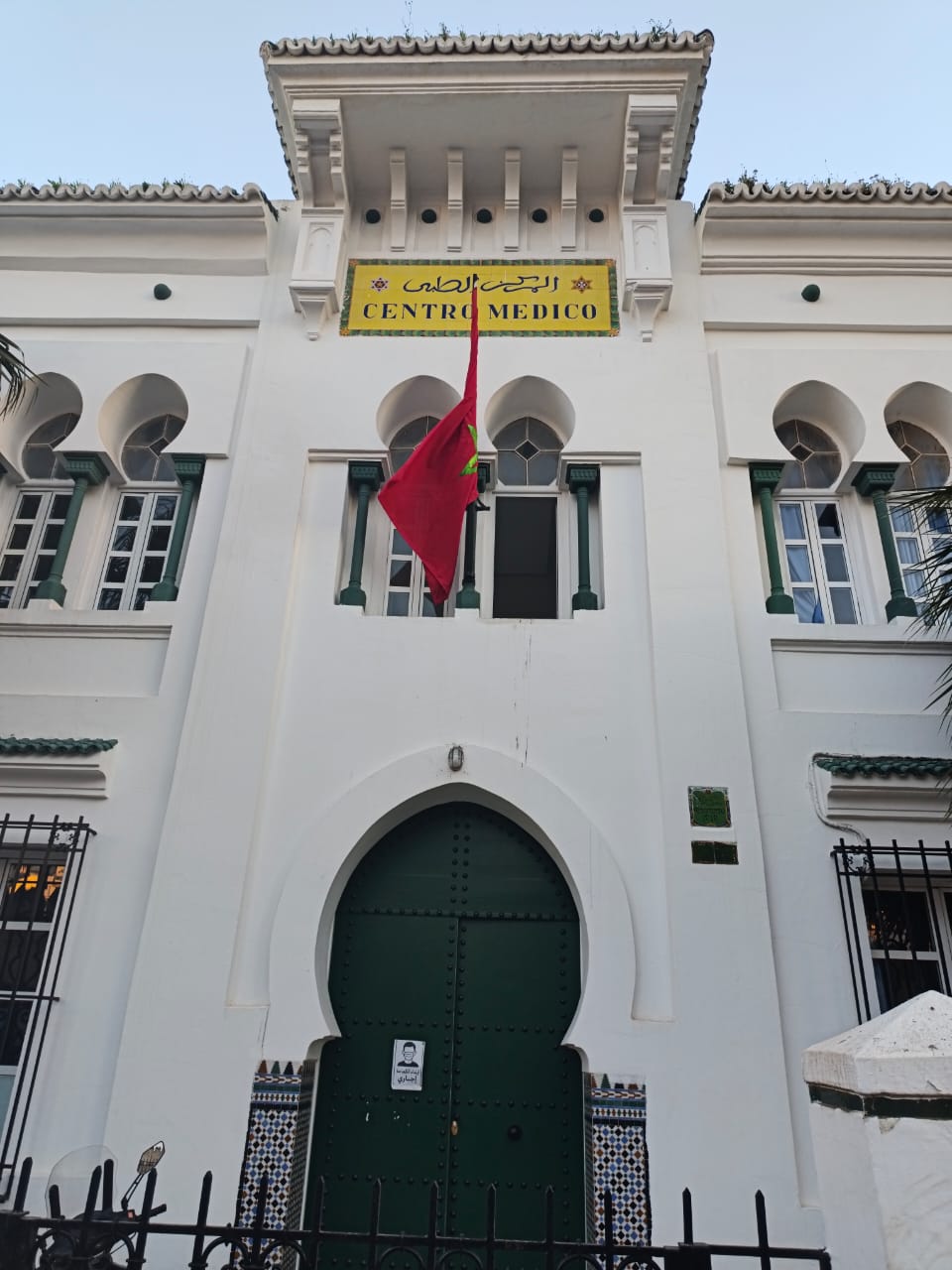
The Centro Médico of Tetouan
Description
The Centro Médico of Tetouan, originally established as a modern medical dispensary during the period of the Spanish Protectorate in Morocco (1912–1956), is one of the notable examples of early twentieth-century public architecture in the city. Constructed approximately between 1925 and 1935, the building was designed to provide medical consultations and public health services to the growing urban population of Tetouan, which served as the administrative capital of the Spanish Protectorate in northern Morocco. Its establishment reflected broader efforts by the colonial administration to modernize urban infrastructure and expand access to healthcare.
Architecturally, the building is an excellent example of the Hispano-Moorish style that characterized many official buildings in Tetouan during this period. The symmetrical façade, horseshoe arches, green-painted woodwork, ceramic tile decoration, and whitewashed walls combine Andalusian and Moroccan motifs with modern construction techniques. This architectural approach sought to harmonize new institutional buildings with the historic aesthetic of Tetouan, reinforcing the city’s distinctive visual identity while accommodating contemporary civic functions.
Today, the Centro Médico continues to serve as a healthcare facility and remains an important architectural landmark within Tetouan. Beyond its medical role, the building stands as a testament to the city’s twentieth-century urban development and to the blending of traditional Moroccan design with colonial-era public architecture. Its preservation contributes to the rich architectural landscape that makes Tetouan one of Morocco’s most historically and culturally significant cities.
Architecturally, the building is an excellent example of the Hispano-Moorish style that characterized many official buildings in Tetouan during this period. The symmetrical façade, horseshoe arches, green-painted woodwork, ceramic tile decoration, and whitewashed walls combine Andalusian and Moroccan motifs with modern construction techniques. This architectural approach sought to harmonize new institutional buildings with the historic aesthetic of Tetouan, reinforcing the city’s distinctive visual identity while accommodating contemporary civic functions.
Today, the Centro Médico continues to serve as a healthcare facility and remains an important architectural landmark within Tetouan. Beyond its medical role, the building stands as a testament to the city’s twentieth-century urban development and to the blending of traditional Moroccan design with colonial-era public architecture. Its preservation contributes to the rich architectural landscape that makes Tetouan one of Morocco’s most historically and culturally significant cities.